Why Good Restaurants Lose Customers They Never Even See
Most restaurant owners are talented at the part that happens inside their four walls. The problem is what's happening outside them - and most owners don't know it's broken.
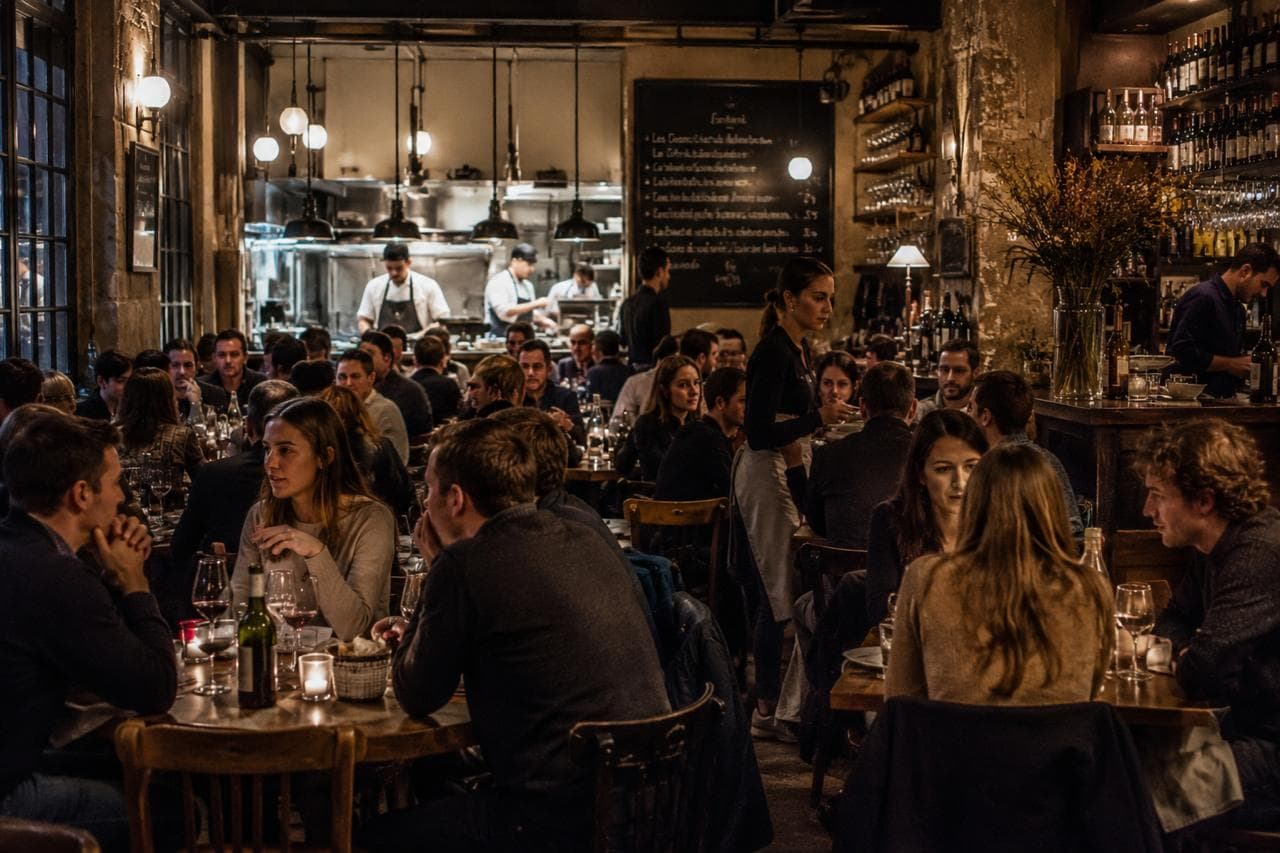
You can have the best food on the street. A warm room, a good team, prices that feel fair. And still - there are empty chairs.
The gap is almost never in the kitchen. It's in what happens before a customer walks through the door. The moment someone searches for a place to eat, pulls up a menu on their phone, or decides whether to bring friends back - that's where most restaurants are losing quietly and invisibly.
This guide is about four specific problems that are costing restaurants customers they never even knew they had - and what fixing each one actually looks like in practice.
You don't own your presence online
Here's a question worth sitting with: if someone searches for your restaurant right now, what do they find?
A Google listing, most likely. Maybe a TripAdvisor page. A handful of photos that customers uploaded. A list of reviews - some glowing, some not, some from two years ago that no longer reflect who you are.
Here is the part that matters: none of that is yours.
Those pages belong to Google, TripAdvisor, and whatever platform is hosting the review. They decide the layout. They decide what gets shown first. They surface the reviews they choose. They might show wrong opening hours because a stranger submitted an edit. They display competitors in the sidebar. A paid listing from a rival restaurant can appear above your own name when someone searches specifically for you.
You have no control over any of it.
“A real online presence is a page you own - a URL where you control everything a customer sees. Not a listing that happens to mention you.”
A real online presence looks different. It's a page you own - a URL where you control what customers see. Your photos, taken the way you want them. Your current menu, always accurate. Your story, in your words. Your hours, your social links, your description - all in one place.
When a customer sends your restaurant to a friend, they should be sharing a link to a page that represents you properly. Not a Google listing that shows competitors in the margin and a review from 2022 at the top.
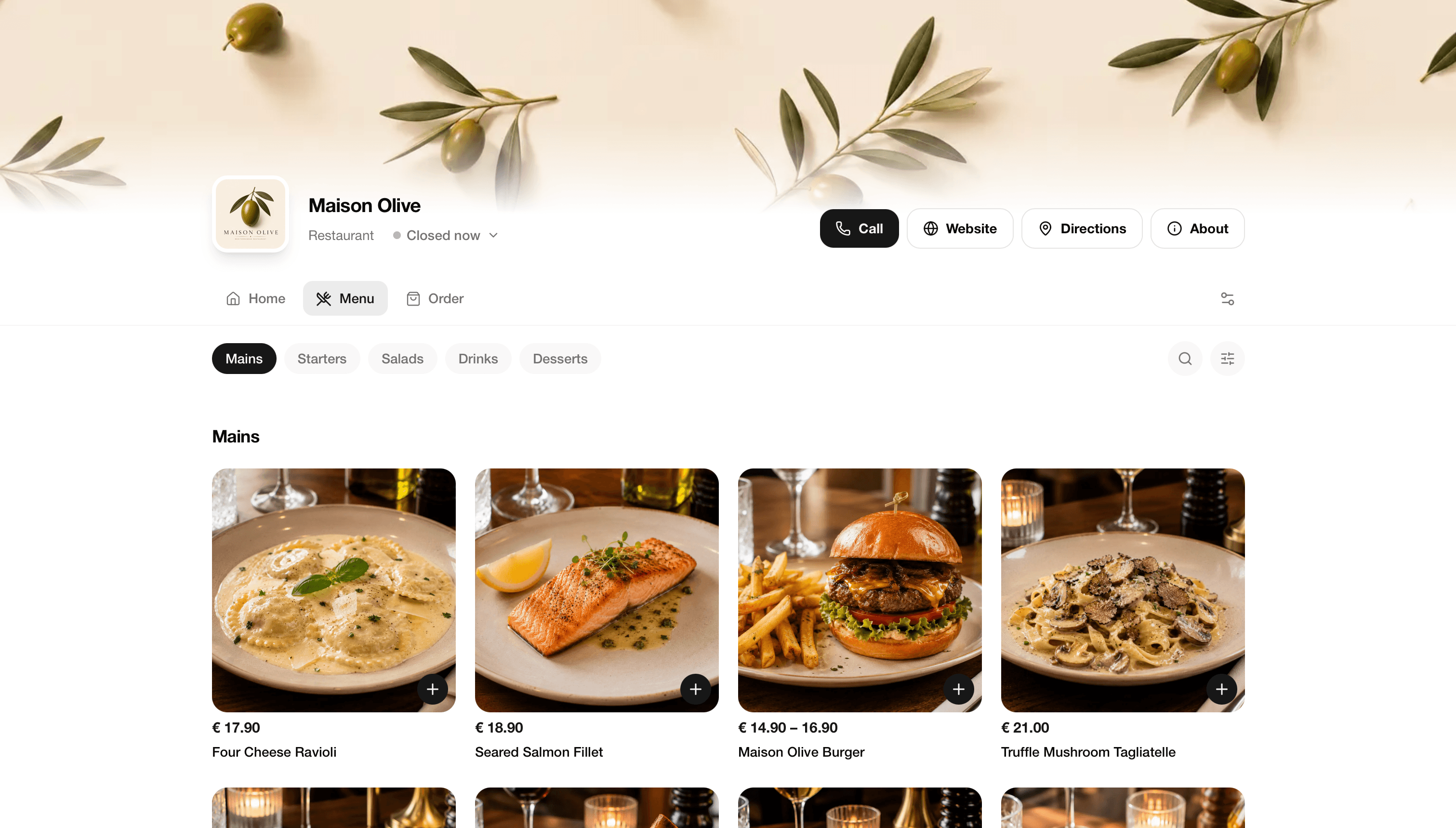
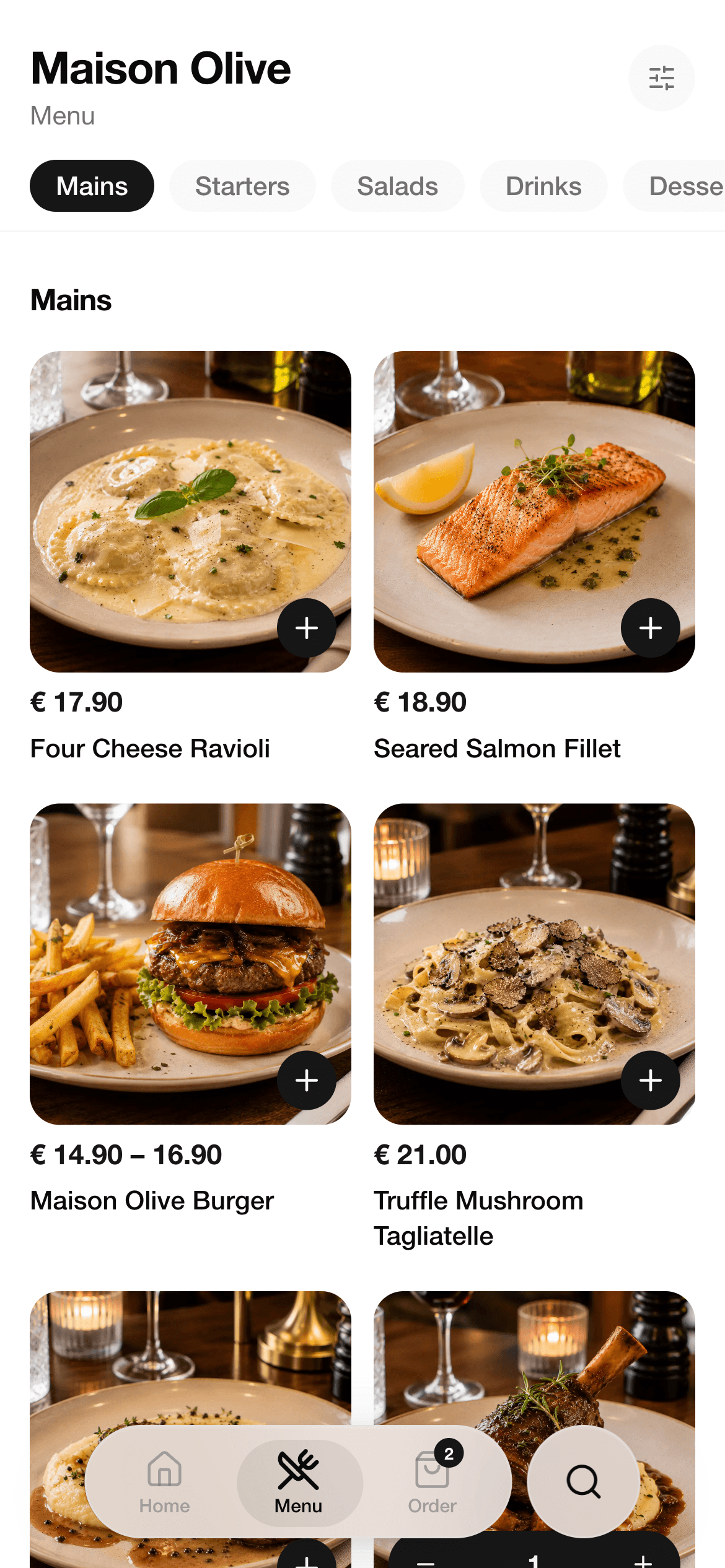
Platerly gives every business a permanent public URL - platerly.app/your-venue - that belongs to you. You set the photos. You write the description. You control every piece of information on it. When a customer lands there, they see your venue the way you want it to be seen.
Your menu is frozen in time
How often does something on your menu change?
A new dish gets added. A price goes up because a supplier increased their costs. An ingredient becomes unavailable and a section needs to be pulled. A seasonal item comes and goes. In a working restaurant, the menu is a living thing - it shifts constantly.
But if your menu is printed, it's frozen the moment it comes out of the printer. Every single change - no matter how small - requires a phone call, a wait of several days, and a bill you didn't budget for. Meanwhile, customers are ordering from a menu that's out of date. Dishes listed that aren't available. Prices that don't match the bill. Items that haven't existed for months.
These moments create small frictions at the table - apologies from staff, confused customers, trust quietly eroded. None of it is catastrophic on its own. But it adds up. And all of it is completely unnecessary.
“Most restaurants reprint their menus two to four times a year. That's between €300 and €1,000 - just to keep the information accurate. And it still isn't enough.”
A digital menu solves this in the simplest way possible: you make the change yourself, from anywhere, and it's live on every customer's phone immediately. No call to the printer. No waiting. No bill.
Raised a price this morning? It's updated before the first table sits down. Ran out of the sea bass mid-service? Toggle it off in ten seconds - customers stop seeing it, no awkward conversations needed. Adding a new dish for tomorrow? Create it tonight and it's ready when the doors open.
The menu your customers see is always the real one. Always current. Always honest.
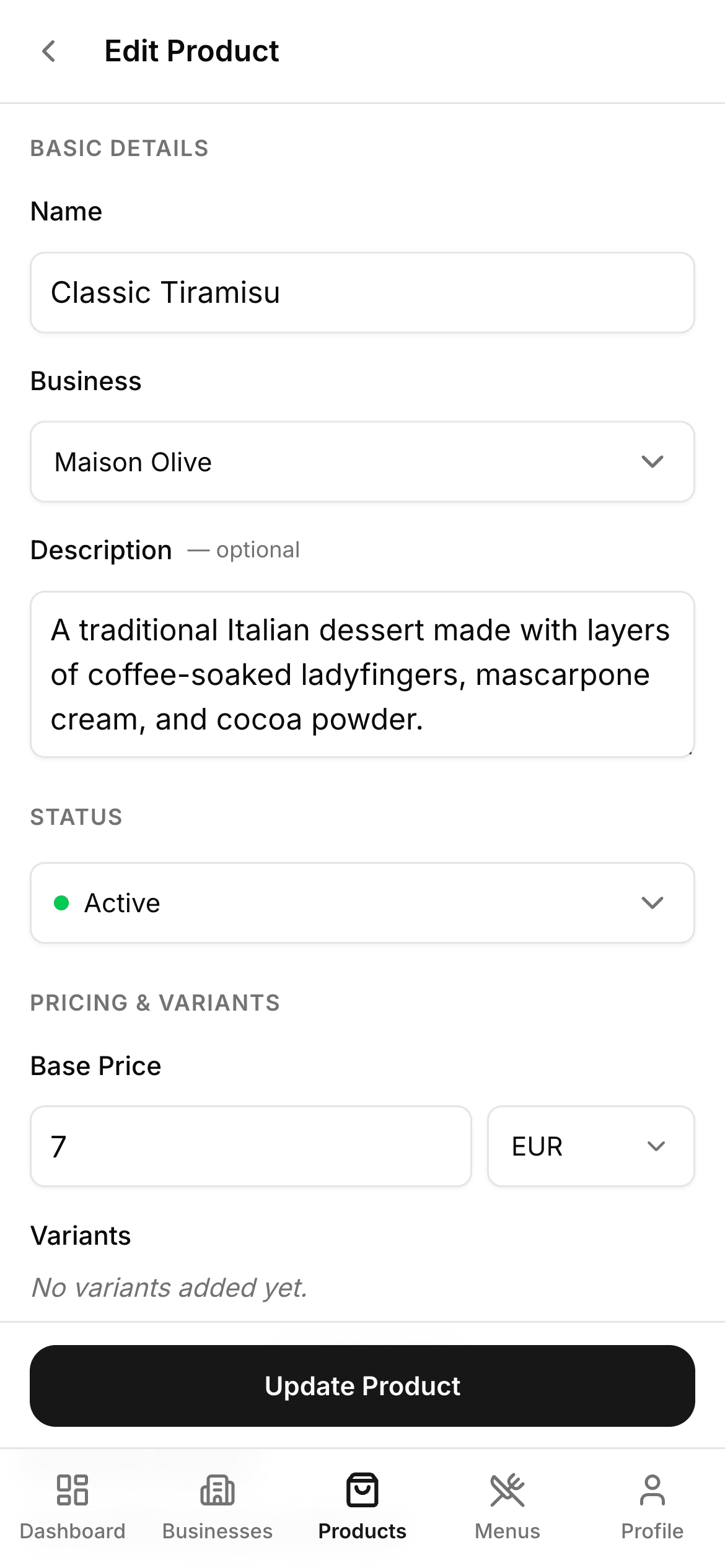
Beyond the practical side, there's something more important: when the menu always reflects reality, customers trust you more. They order with confidence. They don't get surprised at the table. That trust, built in small moments, is what brings people back.
Half your customers can't fully read your menu
Picture this: a group walks in while on holiday. They sit down, open the menu, and immediately hit a wall. They can read the dish names - roughly - but the descriptions are in a language they don't speak. They don't know what's in each dish. They can't tell if anything is suitable for them. Half the ingredients are unfamiliar words.
They don't want to seem difficult. They don't ask too many questions. So they order the safest-looking option - the thing they can point to without explaining themselves. Not what they came in wanting. Not what they would have ordered if they could actually read the menu.
This happens at your restaurant every week. You probably don't notice - the customer doesn't say anything. They leave a smaller tip and don't come back.
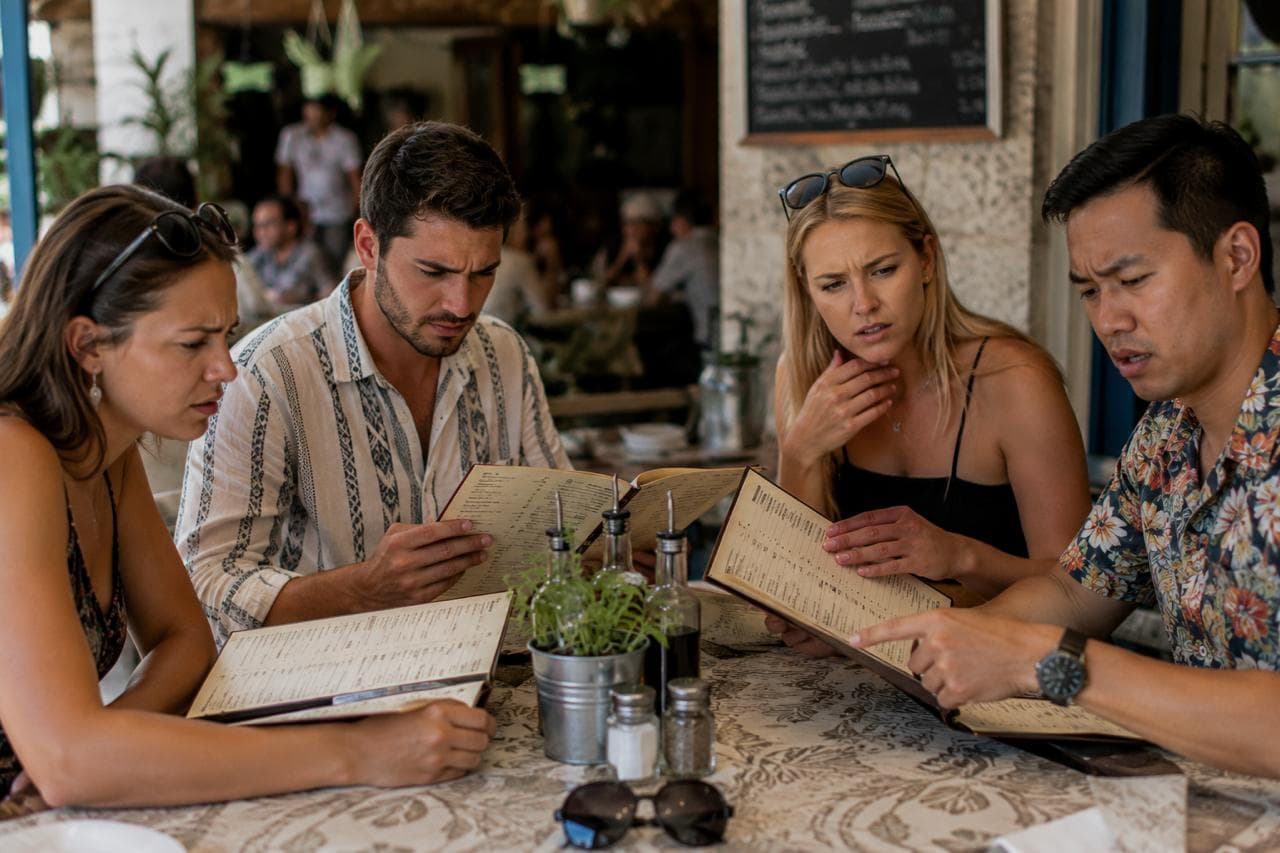
If your restaurant is in a city - any city - a significant share of the people walking through your door don't speak the local language as their first language. Tourists, visitors, expats, business travellers passing through. They all want to eat well. They all have money to spend. The barrier isn't the food. It's the menu.
The traditional answer is multilingual staff. But you can't staff for every language, and the one person who speaks German isn't always on shift. It doesn't scale. There's a better way.
“You can't hire someone who speaks every language. But your menu can speak all of them.”
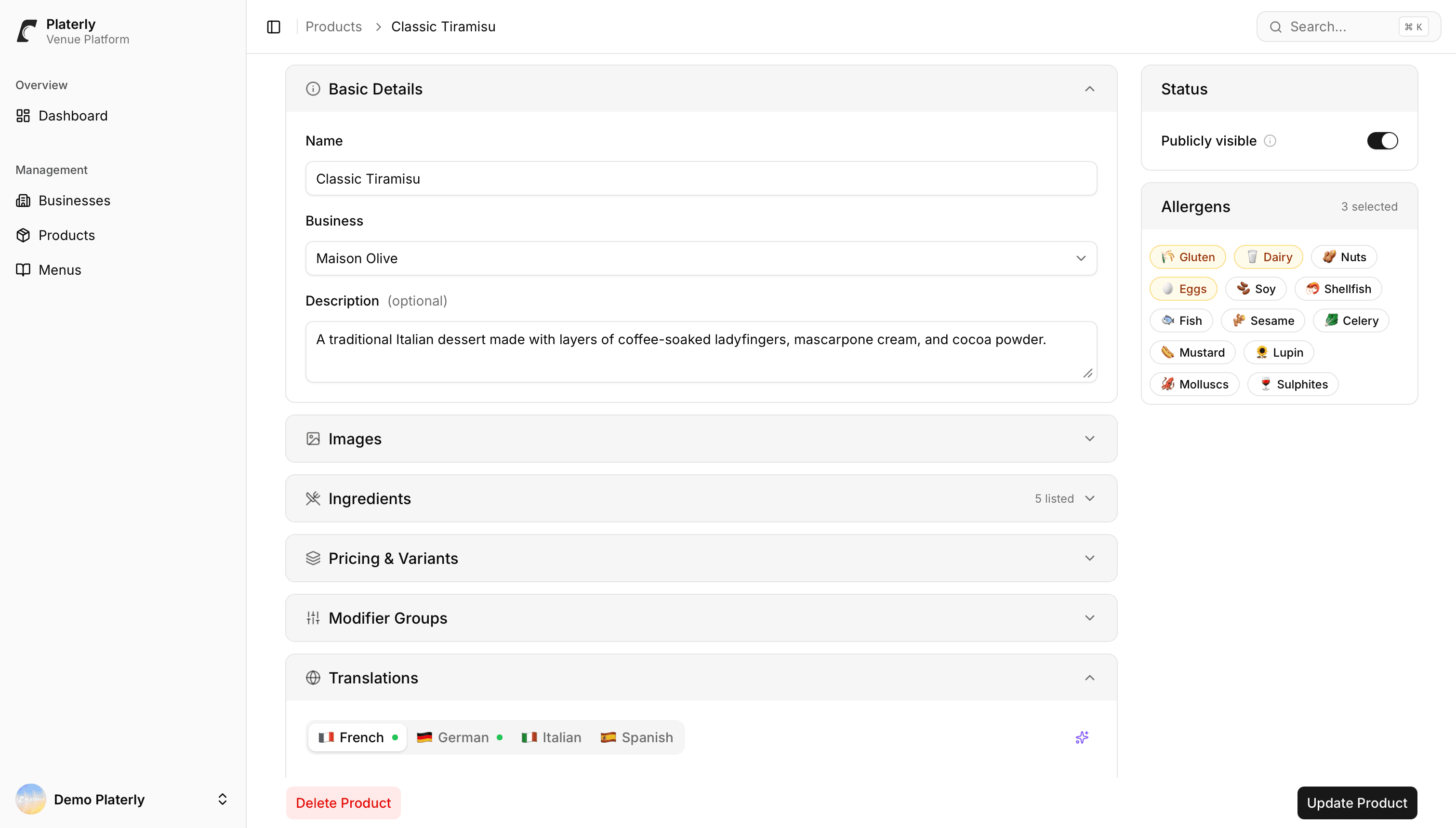
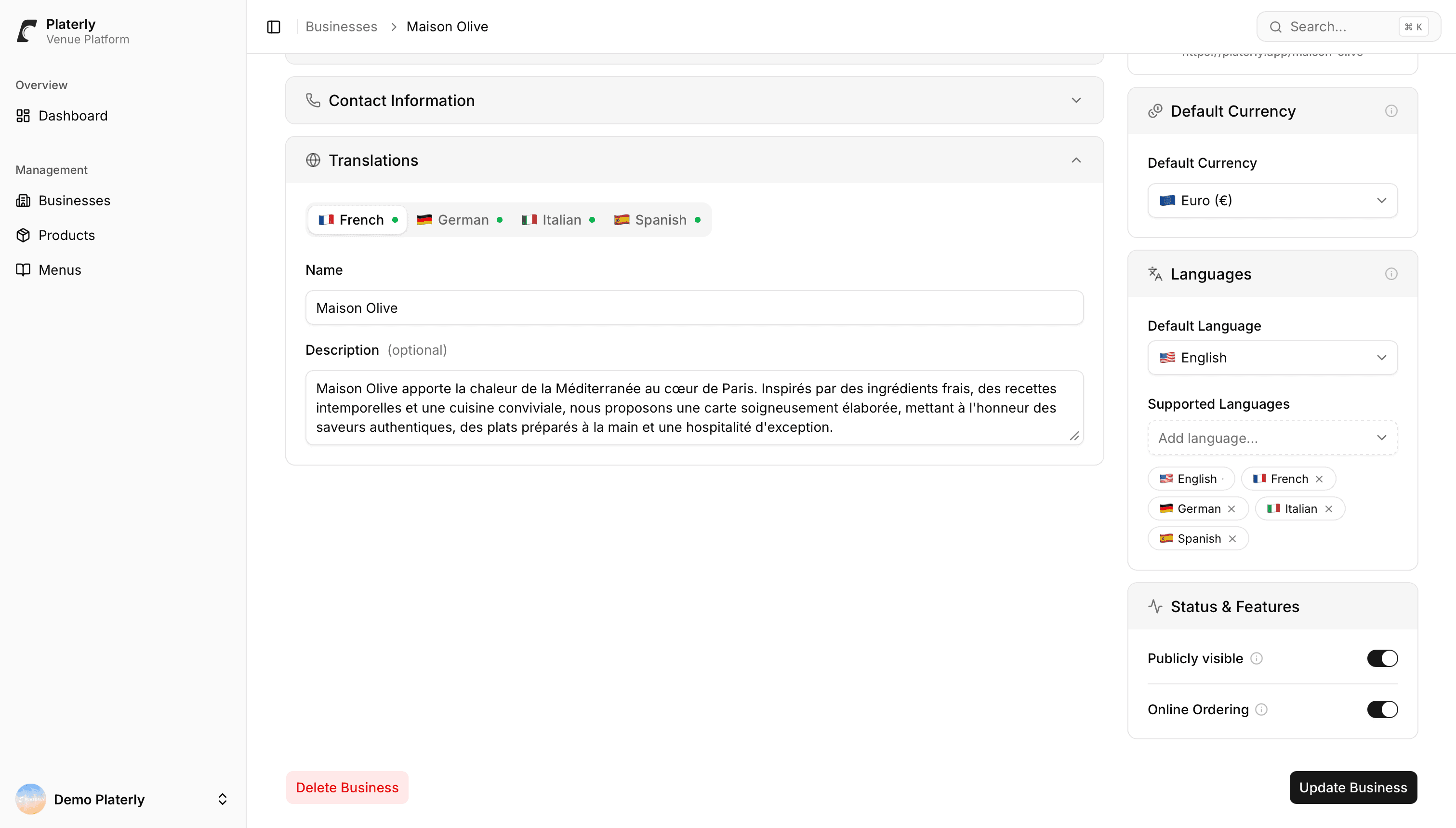
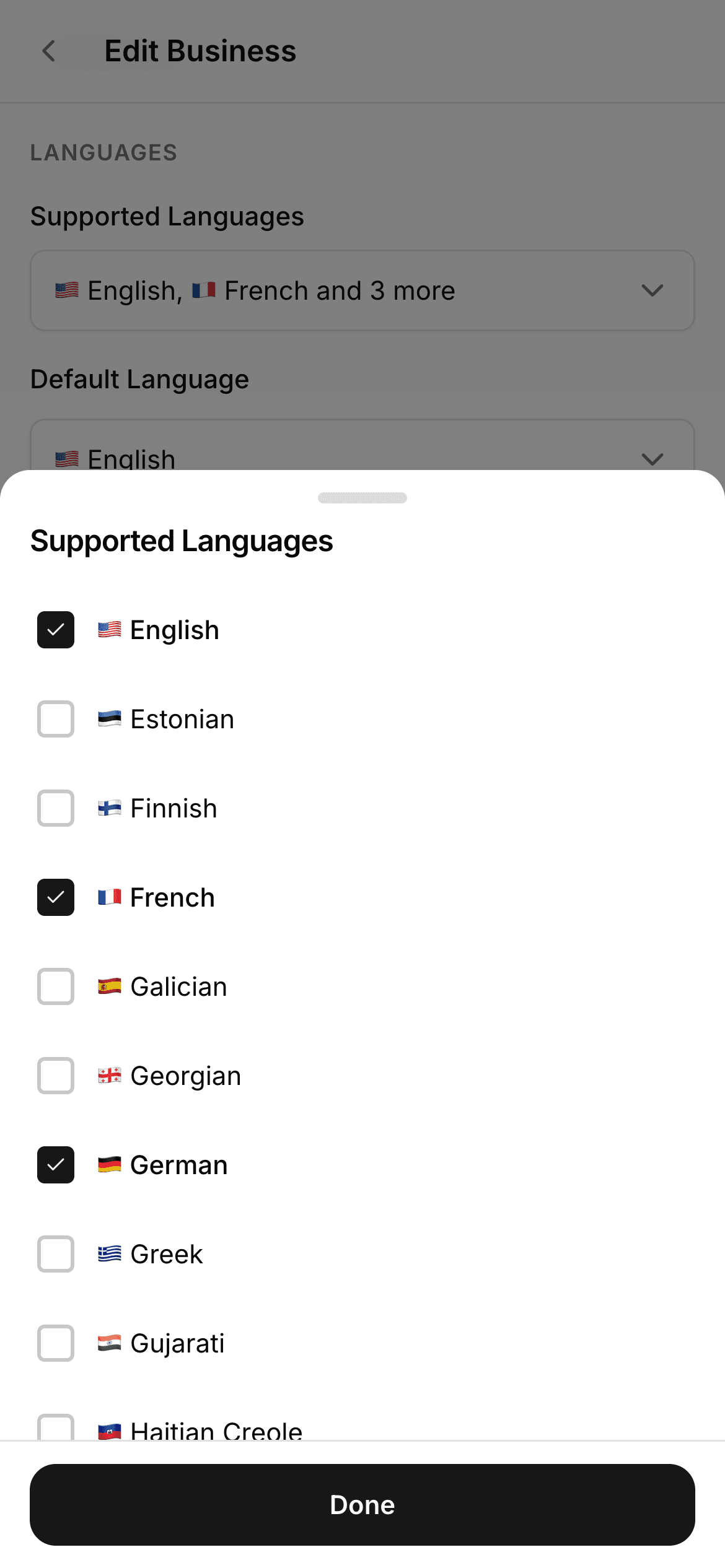
Platerly's multilingual support works like this: when you set up your business, you choose the languages you want your menu to serve. From that moment on, every dish name, description, ingredient, section heading, and modifier option has a translation slot ready to be filled.
You can translate everything yourself. Or you can use Platerly's built-in AI to do it in one click - not robotic machine translation, but natural, professional writing in each language. The kind that reads as though someone who actually speaks the language wrote it.
When a customer opens your menu, they see a language picker. They choose their preferred language and the menu switches instantly. For Arabic-speaking customers, the entire page layout adjusts to right-to-left - the natural direction of Arabic - so the experience feels native rather than translated.
Platerly supports every language in the world. Every customer who opens your menu can read it in the language they think in.
The result is simple: customers who can actually read your menu order more, order more confidently, and have a better experience. They come back. They tell their friends. A menu that speaks their language is a gesture of welcome - and guests notice.
Customers are waiting when they don't have to
It's a busy Friday evening. Every table is taken. Your staff are moving fast. A new group sits down.
They wait for menus to arrive. They wait while your server finds a spare moment to come over. They browse. They discuss. One person asks what's in a dish. Another hasn't decided. Your server comes back - one of them is still thinking. Eventually the order gets taken. The whole process took ten minutes and your server, who is one person covering six tables, has been away from everyone else the entire time.
The bottleneck in a busy restaurant is almost never the kitchen. It's the gap between a customer sitting down and an order being placed. That gap is wide, it's slow, and it's almost completely unnecessary.
“By the time they reached the counter, their order was already decided. The server confirmed it in twenty seconds.”
With a QR code on the table - or on a sign at the entrance - customers can open your full digital menu the moment they arrive. They browse at their own pace. They explore the whole menu without feeling rushed. They add items to a cart, choose their options, and have their order ready before anyone comes to take it.
When your server arrives, the handoff takes twenty seconds. No questions, no back-and-forth, no going away and coming back. The order is already done.
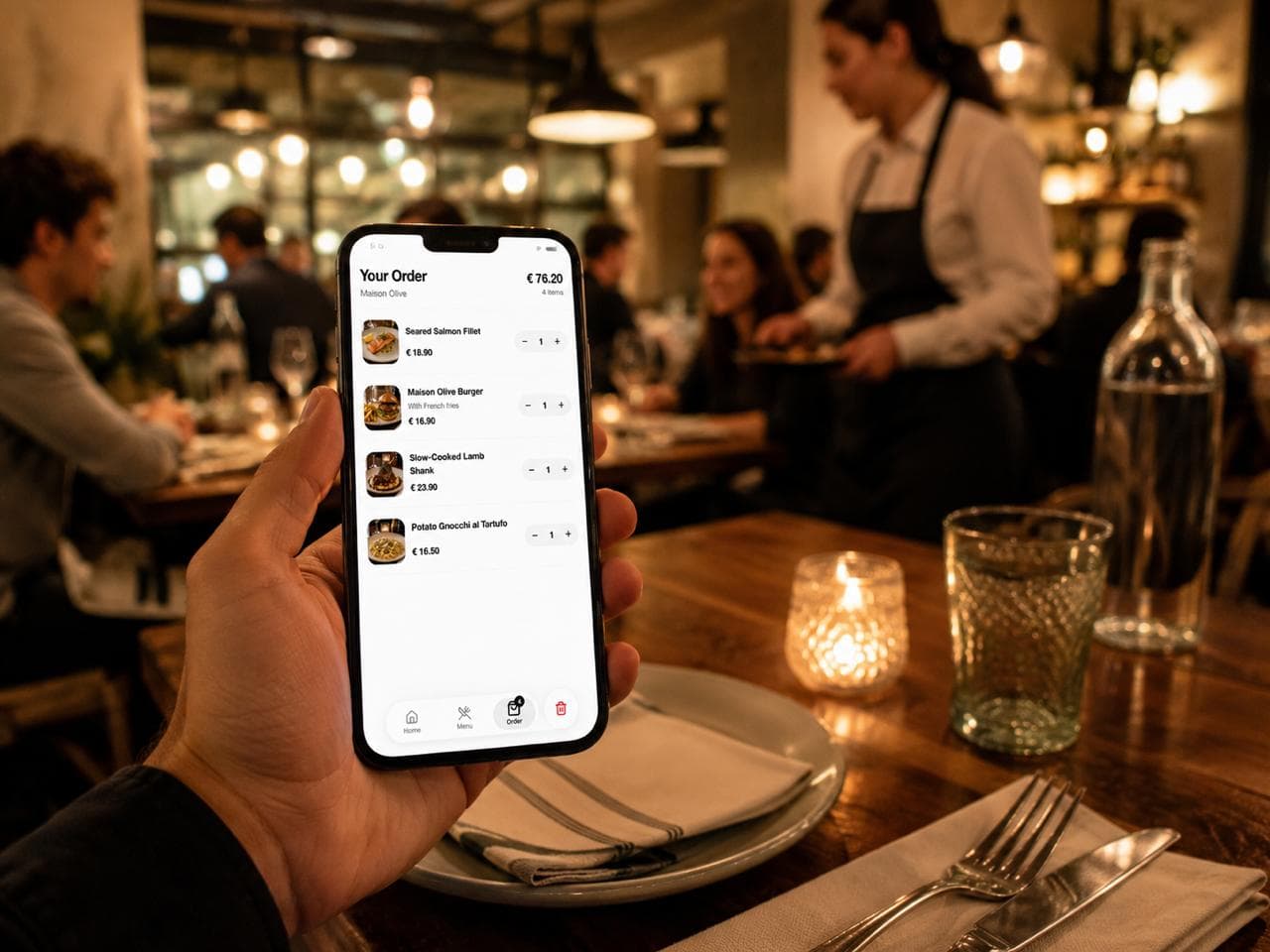
Here is a real scenario worth imagining: a customer is queuing outside your restaurant on a busy night. They scan the QR code from the sign at the entrance while they wait. They browse the full menu in the queue. They decide. By the time they are seated, they know exactly what they want - and so does the friend they've been texting the menu link to.
This is not about removing the human element from dining. Your staff still take the order, still serve the food, still look after the table. What changes is the pace. The awkward waiting disappears. Your team can look after more tables with less stress. Customers feel attended to, even when nobody is standing next to them.
There is one more benefit that rarely gets mentioned: when customers choose their own variants and customisations on screen - no onions, sauce on the side, medium rare - there is almost no room for a mistake. They wrote it themselves. The order that reaches the kitchen is exactly what the customer intended.
These four problems have one fix
The four problems above are not separate issues requiring four separate solutions. They are all symptoms of the same root cause: a restaurant with no owned, up-to-date, accessible digital presence.
Fix that one thing, and you fix all of them.
A permanent public URL
Yours to share, print on packaging, and put in your bio. A page that represents you properly.
A menu you control
Update prices, add dishes, toggle items on and off - instantly, from anywhere, with no reprinting.
Every language supported
AI-powered translations in one click. Every customer reads your menu in the language they think in.
A QR code ready to print
Customers can browse and decide before you even reach the table.
Your full profile in one place
Logo, cover photo, opening hours, social links, description - all visible the moment someone visits your URL.
Customers find restaurants the way they find everything now - on their phones, before they leave the house. They look at photos, they scan the menu, they check the hours, they send the link to whoever is coming with them. That journey happens entirely online, in the sixty seconds before they decide.
What they land on during those sixty seconds matters. It should feel like your restaurant - not a third-party listing that barely knows you exist.
TL;DR
- Most restaurants don't own their online presence - they rely on listings controlled by Google and review platforms.
- Printed menus are always out of date. A digital menu updates in seconds, for free.
- Customers who can't read your menu order less and don't come back. Every language in the world is supported.
- The gap between sitting down and placing an order is the biggest bottleneck in a busy restaurant. A QR code fixes it.
Get your venue online - properly
Most of what's described in this guide takes less than an hour to set up.
Create your business, upload your photos, build your menu, and share the link. Your venue has a real online presence from day one.
Start for free